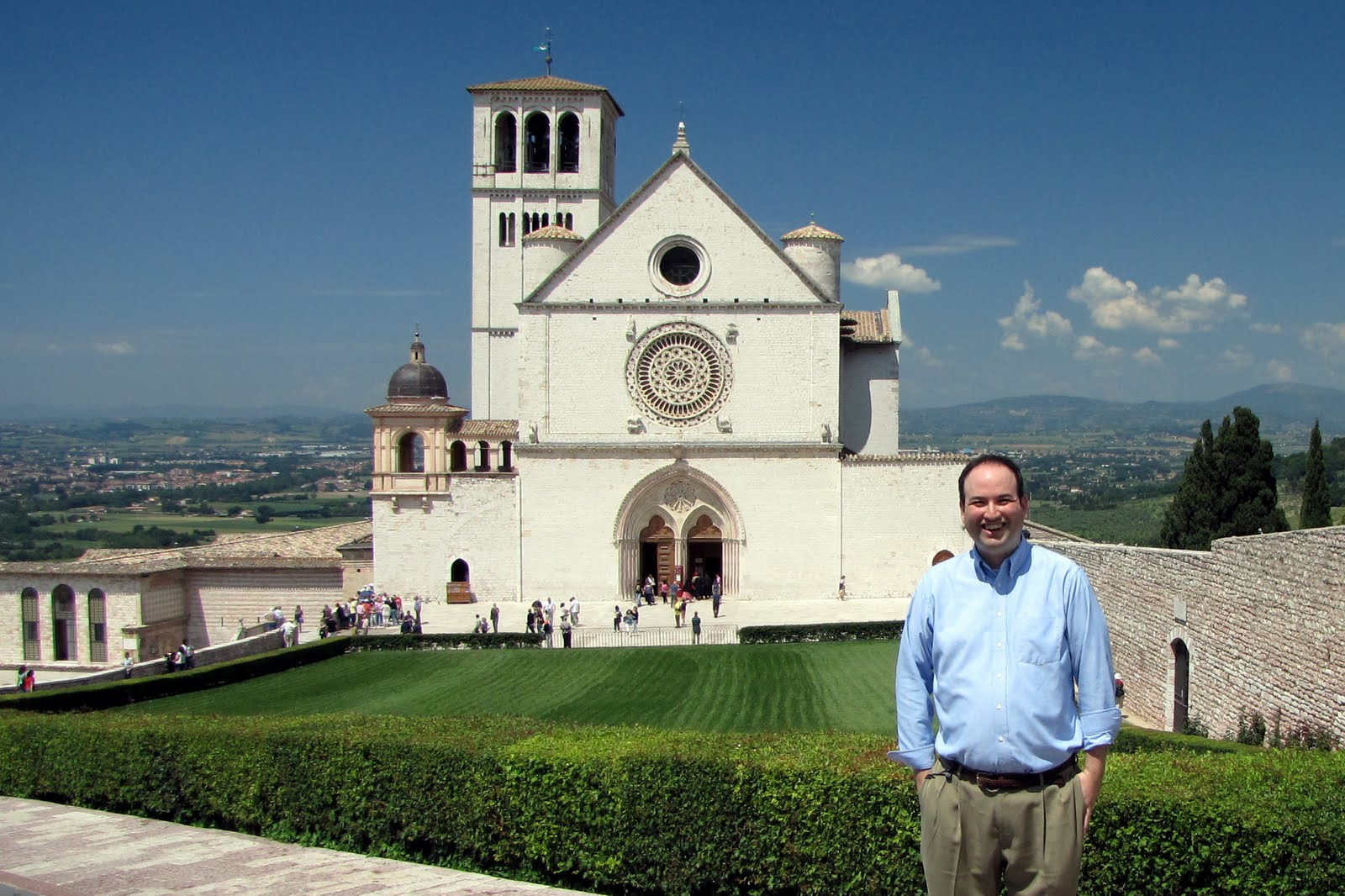
So it's been about a month since my last blog post. I'd hoped to be all done relating my travels through Italy by now, but once again an exciting summer has intervened. So I thought I'd step back and give the brief description of what I've been up to lately this last month.
After the trip in Italy came what I went to Europe for in the first place: The Ninth Valencia international meeting of Bayesian Statistics. This was the first year I had been invited to give a talk: very exciting! So I tried to go with my A material, a new algorithm that my graduate student Sarah and I have been working on for the last year. It did receive a lot of attention, and I found the discussions with those interested in the method to be enormously helpful. One thing I'm working on right now I'm working on the finishing touches on my response to the written discussion of that paper.
So that was a week, and unfortunately, it was also the first week of the Research Experience for Undergraduates (REU) that I am running this summer. I had sent my crew (six students from around the US) daily assignments to work on, but there's nothing like being there in person. So the first few days were a blur as I lectured extensively and got them up to speed on the projects they would be working on.
A few weeks later they were pretty much in self-sufficient mode, and I just had to check in once a day to make sure all was moving along smoothly. As I write this the end of the REU is in sight: next week they will be giving oral presentations of their final results, and both groups are writing up their work in paper form as well. Along the way, I went out to Joshua Tree National Park with lots of the Claremont REU (more than just my six are pictured below) and we also had some other events as well.
Last week was more traveling for me, although not academic in nature. I met my folks in Las Vegas for a three day whirlwind tour of magic and acrobatics before heading out to the Grand Canyon. The last time I was there time was limited but this trip we took our time and did things right. The highlight was a Ranger led morning hike partway down into the Canyon. Great stuff! On the way back we also hit Sunset Volcano National Monument, a gem of a park just north of Flagstaff.
That wasn't the end of the week for me though, as last weekend was La Grande High School class of 1990 twentieth reunion. Also great fun as I met up with friends that I hadn't seen in, well, 20 years! Okay, a few I'd seen since then, and Facebook does make it easier to catch up, but still there's nothing like just hanging out and dancing to the 80's favorites.
Wednesday, July 21, 2010
Tuesday, June 22, 2010
Headed East
Getting out of Florence the next morning proved difficult: an accident on the motorway had traffic backed up halfway to the city center. But eventually we escaped the Tuscan capital and headed East towards Bologna.
My first goal was to see the oldest continually operating university. Their original building is now the public library, with several of the halls left as they were in the Middle Ages. Nice to see that professors got their own shields. There's a tradition I could see reviving!
This is also where the Anatomical Theatre was located, where physicians used to dissect cadavers under the watchful eyes of the clergy, who made sure nothing inappropriate went on.
Next stop in Bologna was the Basilica of Saint Dominic, founder of the Dominican Order. This is a gorgeous building, as befits the final resting place of the saint. Unfortunately, the traffic in Florence meant an abbreviated stop in Bologna, so it was back to the bus.
The next stop was Padua, which has a delightful central park surrounded by a canal that is the second largest square in Europe. Passing through this area, "the group" headed toward the Basilica of Saint Anthony, yet another popular pilgrimage destination. The monument over the tomb of the saint inside was magnificent. What differentiates this place from others I saw was the number of domes, six if I remember correctly. But what I found most interesting was the statue of the saint in a side courtyard. Visitors visitors must have been shaking hands with Saint Anthony for luck or blessings.
Leaving Bologna, we headed for the hotel outside Venice. That night, after dinner, we took a boat to the main square, Piazza San Marco. Finally, a name I can get into! Since it was high tide, and Venice is slowly sinking into the sea, the north end of the square was covered with water. Wading time!
My first goal was to see the oldest continually operating university. Their original building is now the public library, with several of the halls left as they were in the Middle Ages. Nice to see that professors got their own shields. There's a tradition I could see reviving!
This is also where the Anatomical Theatre was located, where physicians used to dissect cadavers under the watchful eyes of the clergy, who made sure nothing inappropriate went on.
Next stop in Bologna was the Basilica of Saint Dominic, founder of the Dominican Order. This is a gorgeous building, as befits the final resting place of the saint. Unfortunately, the traffic in Florence meant an abbreviated stop in Bologna, so it was back to the bus.
The next stop was Padua, which has a delightful central park surrounded by a canal that is the second largest square in Europe. Passing through this area, "the group" headed toward the Basilica of Saint Anthony, yet another popular pilgrimage destination. The monument over the tomb of the saint inside was magnificent. What differentiates this place from others I saw was the number of domes, six if I remember correctly. But what I found most interesting was the statue of the saint in a side courtyard. Visitors visitors must have been shaking hands with Saint Anthony for luck or blessings.
Leaving Bologna, we headed for the hotel outside Venice. That night, after dinner, we took a boat to the main square, Piazza San Marco. Finally, a name I can get into! Since it was high tide, and Venice is slowly sinking into the sea, the north end of the square was covered with water. Wading time!
Sunday, June 20, 2010
Tuscany
The fact that the Italian cities were their own states for so long makes them great places to visit. Each one tried to outdo the others in grandeur, art, and all around magnificence.
Florence, of course, has a few aces up its sleeve. The first is Michelangelo's David, which stood outside in a public square for centuries before being moving indoors for its protection. The statue was everything I believed it to be: a dominating presence that seems so fluid, so lifelike, that it is hard to imagine that this is solid marble. This was another museum where pictures were not allowed, which in this case was kind of nice, since it meant that everyone was actually looking at the statue rather than trying to get pictures of friends and family with it in the background.
The second ace is the Duomo of Florence, with every inch of the exterior covered by carvings and mosaics. The fabulous bell tower is a separate building, as is the baptistery built later (that's the striped building you can just see a bit of on the left). But for true height, you have to climb to the top of the central Dome, which affords a 360 degree view of the city below.
The third (and last) stop in Florence that I had time for was Basilica di Santa Croce. Here some of the most illustrious inhabitants of Florence are interred. Galileo, Marconi, Machiavelli, and of course Michelangelo are just part of the tombs that line the walls.
For the remainder of the afternoon, the tour headed to Pisa, and the famous Piazza di Miracoli--the Square of Miracles. Like the Florence Duomo, this really consists of three separate buildings, the main Cathedral, the Bapistery, and the bell tower constructed later. Of course, the bell tower was the ill fated one of the three, whose gradual sinking into the soil gave rise to one of Italy's greatest landmarks: the Leaning Tower of Pisa. After touring the Cathedral and Basilica, I went over to try to get the standard picture every tourist is required to take. Fortunately, I had met a pair of Australian women on the tour, May and Carol, and they were able to help me out. (The keen eyed among you will note the distinctive outline of my Lonely Planet Italian phrasebook in my left pocket.)
Florence, of course, has a few aces up its sleeve. The first is Michelangelo's David, which stood outside in a public square for centuries before being moving indoors for its protection. The statue was everything I believed it to be: a dominating presence that seems so fluid, so lifelike, that it is hard to imagine that this is solid marble. This was another museum where pictures were not allowed, which in this case was kind of nice, since it meant that everyone was actually looking at the statue rather than trying to get pictures of friends and family with it in the background.
The second ace is the Duomo of Florence, with every inch of the exterior covered by carvings and mosaics. The fabulous bell tower is a separate building, as is the baptistery built later (that's the striped building you can just see a bit of on the left). But for true height, you have to climb to the top of the central Dome, which affords a 360 degree view of the city below.
The third (and last) stop in Florence that I had time for was Basilica di Santa Croce. Here some of the most illustrious inhabitants of Florence are interred. Galileo, Marconi, Machiavelli, and of course Michelangelo are just part of the tombs that line the walls.
For the remainder of the afternoon, the tour headed to Pisa, and the famous Piazza di Miracoli--the Square of Miracles. Like the Florence Duomo, this really consists of three separate buildings, the main Cathedral, the Bapistery, and the bell tower constructed later. Of course, the bell tower was the ill fated one of the three, whose gradual sinking into the soil gave rise to one of Italy's greatest landmarks: the Leaning Tower of Pisa. After touring the Cathedral and Basilica, I went over to try to get the standard picture every tourist is required to take. Fortunately, I had met a pair of Australian women on the tour, May and Carol, and they were able to help me out. (The keen eyed among you will note the distinctive outline of my Lonely Planet Italian phrasebook in my left pocket.)
Thursday, June 17, 2010
Heading north
Leaving Rome in a little car is a trick, leaving it with a 60 person bus is just amazing. But our driver successfully navigated the vehicle our tour guide nicknamed "The Monster" through five hotel pickups and then we were on our way.
First stop was the town of Assisi, home to St. Francis, or should I say San Francesco. In 1228, two years after the death of the saint, the new order decided to build a Basilica in Assisi. This was the first major religious building I saw in Italy, and it was far from the last.
Assisi itself is set upon the side of a hill, which makes the town proper a series of switchbacks aligned with the old Roman walls. On one end is the Basilica, with wonderful views over the valley below. Inside there are frescoes which mark a shift in subject: instead of purely religious figures, they show the common people instead. It has multiple levels, the original, the crypt below where the saints body is entombed, and a more airy upper level built later. Like many Italian holy buildings, photos were not permitted inside. A quick stop for lunch and then we were on our way.
The next stop was Siena, set in the middle of Tuscany. Once a major crossroads, the buildings constructed during the Renaissance heyday are wonderful. The centerpiece is The Duomo. Every major city in Italy has a Duomo, which was the most important church in the city. 
Every place I visited seemed to have a unique feature: in the case of the Siena Duomo it was the wonderful floor tilings. This is where being part of a tour is unfortunate, I wish that I had more time to explore the museums in the historic center, or climb the tower in the Piazza del Campo. Next time!
Saturday, June 12, 2010
Roam if you want to
Rome! The Eternal City! Like most tourists arriving somewhere for the first time, I took a taxi from the airport to my hotel, and gawked at the scenery. The main road to the center of Rome goes right past old Roman walls, churches, and even the Colosseum in all its magnificent ruined glory. That's what I came to see!
So even though my plane was late and I did not get to my hotel until about 5:00, I immediately headed out to see some sights. Despite it being a Sunday, shops were still open (including the little tourist info booth) and sightseers were thronging around. I walked down about half a mile to where the main archaeological attractions were. You can get a great view of the old Roman buildings from the top of the hill, too bad it was getting too late to do the close up tour. Still, it really was great just walking around soaking up history. Tomorrow my Italian tour would begin!
Saturday, May 15, 2010
Better living through science
Iron Man was the first engineering superhero. Sure Spiderman created his webbing from his chem knowledge, but only after that radioactive spider had given him most of his powers. And Batman's toys always took second place to his physical conditioning. Iron Man created his own powers one step at a time, one model suit at a time.
That is why I was so excited when the first Iron Man movie came out to see what they would do with it. And I was not disappointed. This was a movie that reveled in the engineering, delighted itself in the process of creation. Too often science is viewed as a static memorization of facts and laws rather than the creative process that it really is. To do science is to create something new, to connect to the world in a way that no one else has done before.
I saw Iron Man 2 last weekend, and this is one sequel that accomplishes the rare feat of improving upon the original. Early in the film we see a clip of Tony Stark's father (played by the always delightful John Slattery) introducing the Stark Expo in the 70's. The standard touchstones are there: grainy film quality, toy model city of the future, optimism that science will lead to a better world.
What struck me was that this was presented in an entirely irony free way. There's no Men in Black style behind the curtain pullback, no tongue in cheek "boy weren't they idiots in earlier times" subtext. This is played straight: the simple idea that good science can prevail over evil in the world.
This is the story of our time. There seems to be a sense that we are entering a new age of technology. One where technological progress is not only important, but necessary to our survival. The last century was the age of Petroleum and the Green Revolution, where cheap energy and massive increases in food production led to unintended consequences. To master the problems these "advances" created, society is looking toward science and engineering. It is not an option to return to a preindustrial time, there are too many people to feed, too much at stake. So now society is going double or nothing: pouring money into green technology in hopes of keeping the plates spinning.
That is the same story unfolding in Iron Man 2. The power technology that Stark thought he had perfected has unintended consequences of its own. Every military in the world seeks it, while it slowly poisons Stark's body from within. The only way through? Advance the science his father started, create a truly clean energy source.
Easy to do for a superhero in a summer blockbuster. Will the world succeed on this course? The next few decades should be interesting.
Iron Man: 4 out of 5 stars
Iron Man 2: 4 1/2 out of 5 stars
That is why I was so excited when the first Iron Man movie came out to see what they would do with it. And I was not disappointed. This was a movie that reveled in the engineering, delighted itself in the process of creation. Too often science is viewed as a static memorization of facts and laws rather than the creative process that it really is. To do science is to create something new, to connect to the world in a way that no one else has done before.
I saw Iron Man 2 last weekend, and this is one sequel that accomplishes the rare feat of improving upon the original. Early in the film we see a clip of Tony Stark's father (played by the always delightful John Slattery) introducing the Stark Expo in the 70's. The standard touchstones are there: grainy film quality, toy model city of the future, optimism that science will lead to a better world.
What struck me was that this was presented in an entirely irony free way. There's no Men in Black style behind the curtain pullback, no tongue in cheek "boy weren't they idiots in earlier times" subtext. This is played straight: the simple idea that good science can prevail over evil in the world.
This is the story of our time. There seems to be a sense that we are entering a new age of technology. One where technological progress is not only important, but necessary to our survival. The last century was the age of Petroleum and the Green Revolution, where cheap energy and massive increases in food production led to unintended consequences. To master the problems these "advances" created, society is looking toward science and engineering. It is not an option to return to a preindustrial time, there are too many people to feed, too much at stake. So now society is going double or nothing: pouring money into green technology in hopes of keeping the plates spinning.
That is the same story unfolding in Iron Man 2. The power technology that Stark thought he had perfected has unintended consequences of its own. Every military in the world seeks it, while it slowly poisons Stark's body from within. The only way through? Advance the science his father started, create a truly clean energy source.
Easy to do for a superhero in a summer blockbuster. Will the world succeed on this course? The next few decades should be interesting.
Iron Man: 4 out of 5 stars
Iron Man 2: 4 1/2 out of 5 stars
Saturday, April 24, 2010
The Doctor is dead, long live the Doctor!
It was a glorious few seasons with David Tennant, the eminently likable Doctor Who, but all good things must come to an end. For those who aren't familiar with the series, The Doctor is a Time Lord, a species that short of disintegration regenerates after death into an entirely new body.
The eleventh Doctor took the reins this season, and in a policy turnaround BBC America is showing the series in the US a mere two weeks behind the UK debut. With a new Doctor, new showrunner, new companion, new sets and new opening, thing could go very right...or very wrong.
That's the reason why I'm so pleased by the two episodes so far. They have had that magical Doctor quality, skirting the line between madcap adventure, social commentary, with a dash of science fiction wackiness for good measure.
So far the episodes have touched base with the series history, but the most fun for me has been the many nods to Hitchhiker's Guide to the Galaxy. Douglas Adams had worked on several episodes in the series, and conversely both his Hitchhiker's series and the Dirk Gently series incorporated time travel.
In the first episode of the new season, ships hover above the Earth and are about to destroy it, but unlike the Vogon's the 2010 aliens can tap into our cellphones as well as TV and radio to broadcast their message of Doom. At the end of the first episode, the Doctor's new lithesome companion joins him from her bedroom--and so spends the entire second episode in her nightgown, much like the hapless Arthur Dent in his bathrobe.
And oh yes, there's a whale. In space. I love the human imagination, always creating new variations on themes both strange and sublime.
The eleventh Doctor took the reins this season, and in a policy turnaround BBC America is showing the series in the US a mere two weeks behind the UK debut. With a new Doctor, new showrunner, new companion, new sets and new opening, thing could go very right...or very wrong.
That's the reason why I'm so pleased by the two episodes so far. They have had that magical Doctor quality, skirting the line between madcap adventure, social commentary, with a dash of science fiction wackiness for good measure.
So far the episodes have touched base with the series history, but the most fun for me has been the many nods to Hitchhiker's Guide to the Galaxy. Douglas Adams had worked on several episodes in the series, and conversely both his Hitchhiker's series and the Dirk Gently series incorporated time travel.
In the first episode of the new season, ships hover above the Earth and are about to destroy it, but unlike the Vogon's the 2010 aliens can tap into our cellphones as well as TV and radio to broadcast their message of Doom. At the end of the first episode, the Doctor's new lithesome companion joins him from her bedroom--and so spends the entire second episode in her nightgown, much like the hapless Arthur Dent in his bathrobe.
And oh yes, there's a whale. In space. I love the human imagination, always creating new variations on themes both strange and sublime.
Subscribe to:
Posts (Atom)